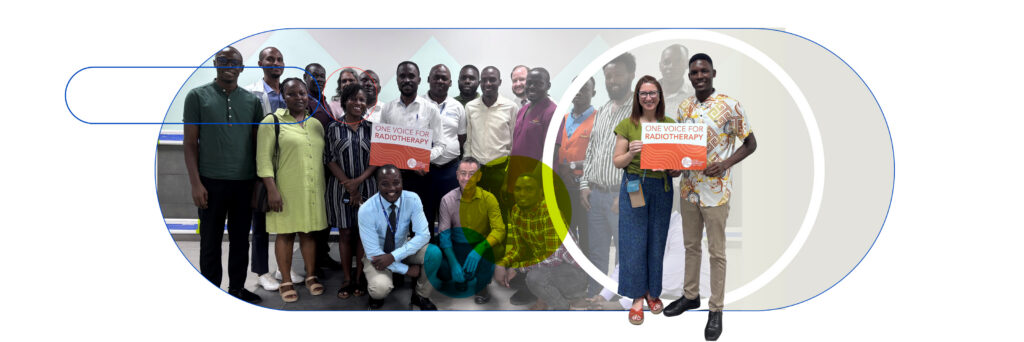
On September 7th, 2025, the global radiotherapy community united for the first-ever
World Radiotherapy Awareness Day (WRAD)—a milestone event dedicated to spotlighting the crucial role of radiotherapy in cancer care, symptom relief, and improving patients’ quality of life. WRAD’s debut resonated worldwide, igniting conversations and collaborations across continents, and inspiring professionals, societies, and patients to share their stories under the banner of “One Voice for Radiotherapy.”
As WRAD looks ahead, the focus shifts to amplifying the patient voice, fostering regional leadership, and driving policy change to make radiotherapy more understood and accessible for all.
Join us as we explore the journey so far and the strategies shaping WRAD’s future.
1. What were some of the key factors that contributed to the impressive global engagement with WRAD in its inaugural year?
Thank you! We were delighted with the global engagement in WRAD’s foundation year. The urgent need to raise awareness about the important role of radiotherapy in cancer treatment struck a chord with many individuals and groups worldwide. In this inaugural year, our focus was on forming a credible and visible campaign to encourage participation from radiotherapy health professionals and societies. We sought professional community’s engagement in choosing the logo and the statement “One Voice for Radiotherapy” and this gave ownership of WRAD to the radiotherapy community and helped amplify the message, reaching a diverse global audience.
WRAD’s social media channels were employed to promote the event, encouraging the sharing of personal stories, which facilitated a global conversation and increased visibility. WRAD had over 350,000 interactions on social media, with posts from 109 countries. Involvement from radiotherapy professionals and cancer institutions encouraged participation as they shared insights and personal testimonies.
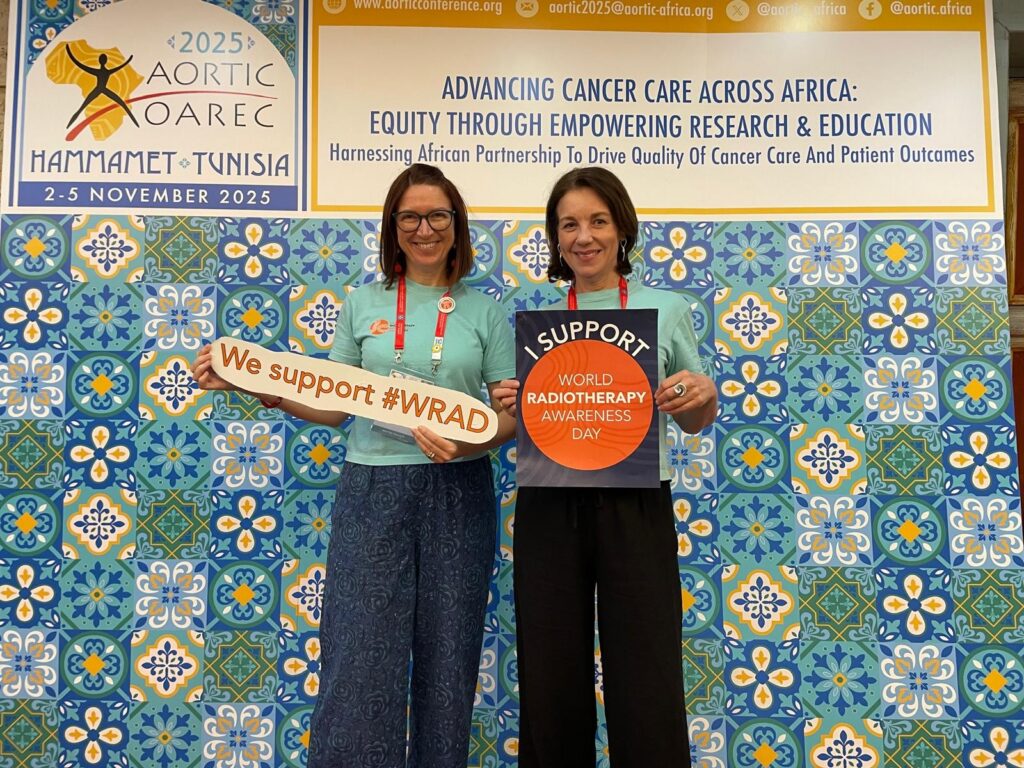
Endorsement from radiotherapy professional societies enhanced collaborative efforts, with over 75 societies pledging support for WRAD. These societies held local or webinar events for WRAD, including AORTIC, ASTRO, BIR, CACA, ESTRO, GAMPA, ISRRT, MESTRO, and PROS.
2. How did different regions respond to WRAD, and were there any trends that you encountered?
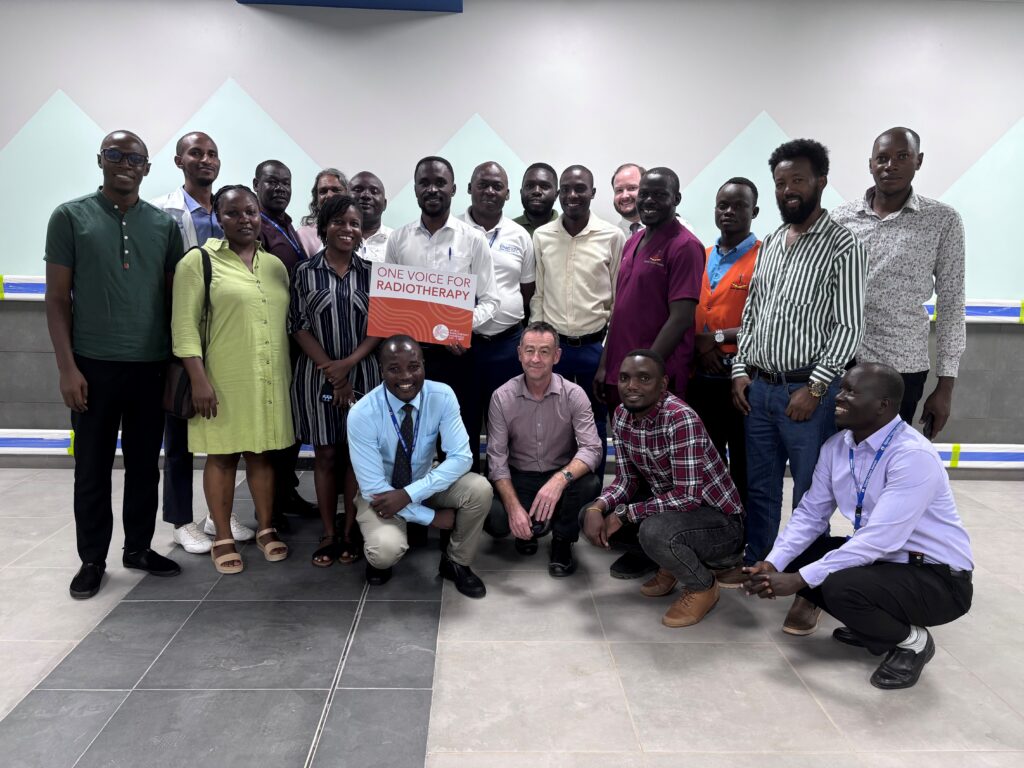
Our major advocacy focus in this our foundation year was engaging with radiotherapy professionals and societies through social media. The WRAD platform allowed individuals to connect with others they would otherwise never have met, fostering a true sense of community under the banner of “One Voice for Radiotherapy.” We witnessed amazing messages and events for WRAD from around the world. For instance, on September 7th, a global journey took us to radiotherapy professionals in Montevideo, Uruguay; to the Portuguese Association of Radiation Therapists; to an event at the Mbingo Baptist Hospital in Cameroon; to a fantastic video montage from the South East Asian Radiation Oncology Group (SEAROG); and finally to centres in Australia and New Zealand.
There were certain key individuals and groups that were particularly active on social media and significantly helped us grow the WRAD following. It was especially exciting when these “super posters” emerged from outside the WRAD committee network, as it showed how much the campaign was desired. The WRAD website hosts media resources containing materials translated into over 15 languages, which greatly aided in our global reach.
We observed various professions from different communities coming together as one voice. I would specifically like to highlight the global radiation therapist community. They have a keystone role, not only as experts in radiotherapy technology but also as vital hands-on patient support providers, making them our most vocal WRAD advocates.
3. Any initiatives or highlights you’d like to share with us?
There were so many engaging events! I would like to mention the Global Alliance for Medical Physics Education and Research (GAMPER), which hosted a stellar webinar for WRAD on radiotherapy access and the essential role of medical physicists as vital health professionals. The International Society of Radiographers and Radiological Technologists, representing 86 countries with over 500,000 members, also ran a webinar to promote WRAD and emphasized the need to train more radiation therapists to ensure quality patient care. From our 75 supporter societies, I would like to highlight AORTIC, ASTRO, BIR, CACA, ESTRO and MESTRO for their incredible posts and unwavering support for hosting WRAD conference sessions. Their contributions have significantly enriched the event and fostered a collaborative spirit within the community.
Additionally, the WRAD community organized several local events. A big thank you is due to the Ocean Road Cancer Centre in Tanzania for hosting a WRAD-themed fun run, and to the Big Radiotherapy Walk Namibia, organized by Windhoek Central Hospital, for their fantastic efforts. Special recognition goes to the Evercare Hospital in Dhaka, Bangladesh, for creating the largest WRAD cake. The Discipline of Radiation Therapy at Trinity College Dublin hosted a patient-centered event, giving patients the opportunity to share their experiences with radiation therapy while educating others about it as a cancer treatment for the first time. Furthermore, the Radiation Oncology Interest Group at Aga Khan University Hospital in Pakistan produced beautiful graphics for WRAD.
4. Looking ahead, what are some of the main strategies you plan to implement to build on this success in the coming years?
We will continue to build WRAD as a convenor that brings together stakeholders for discussions, collaborations, and events focused on radiotherapy advocacy. Our goal is to facilitate dialogue, share information, and foster collaboration among diverse professional groups.
Our key focus for 2026 is to bring the patient voice into WRAD. We will actively seek out patient and consumer advocacy groups from around the world to share their stories and join the WRAD platform, providing them the opportunity to network with professionals, industry representatives, and policymakers. By sharing personal radiotherapy stories, patient and consumer groups can humanise the issues and technology, influence public awareness and policy. In many parts of the world, there is also a pressing need to reduce the stigma surrounding a cancer diagnosis, and we hope that broader education on radiotherapy within communities will have a positive impact.
We are actively seeking Regional Champions who can serve as local leaders and mobilizers for WRAD. These individuals possess a deep understanding of their community’s specific challenges related to radiotherapy access. By leveraging this knowledge, Regional Champions can tailor WRAD’s messaging to resonate with local values, address challenges, and prioritise community needs. Their role will facilitate collaboration among stakeholders, ranging from grassroots community members to influential policymakers.
Our long-term objective is to utilize the WRAD platform as a powerful tool for advocating policies that enhance access to radiotherapy.
Want to learn more about WRAD?