CASE STUDY | FOX CHASE CANCER CENTER
Stereotactic Body Radiotherapy of a Lung Tumor With Large Respiratory Motion Using Real-time Adaptive Motion Management: A Case Report
Challenge:
Solution:
Case:
| Patient | 72-year-old female |
| Diagnosis | Stage IA2 non-small cell lung cancer in the right lower lobe |
| Radiotherapy Challenge | Tumor exhibited large respiratory motion (~5 cm) and an elongated shape |
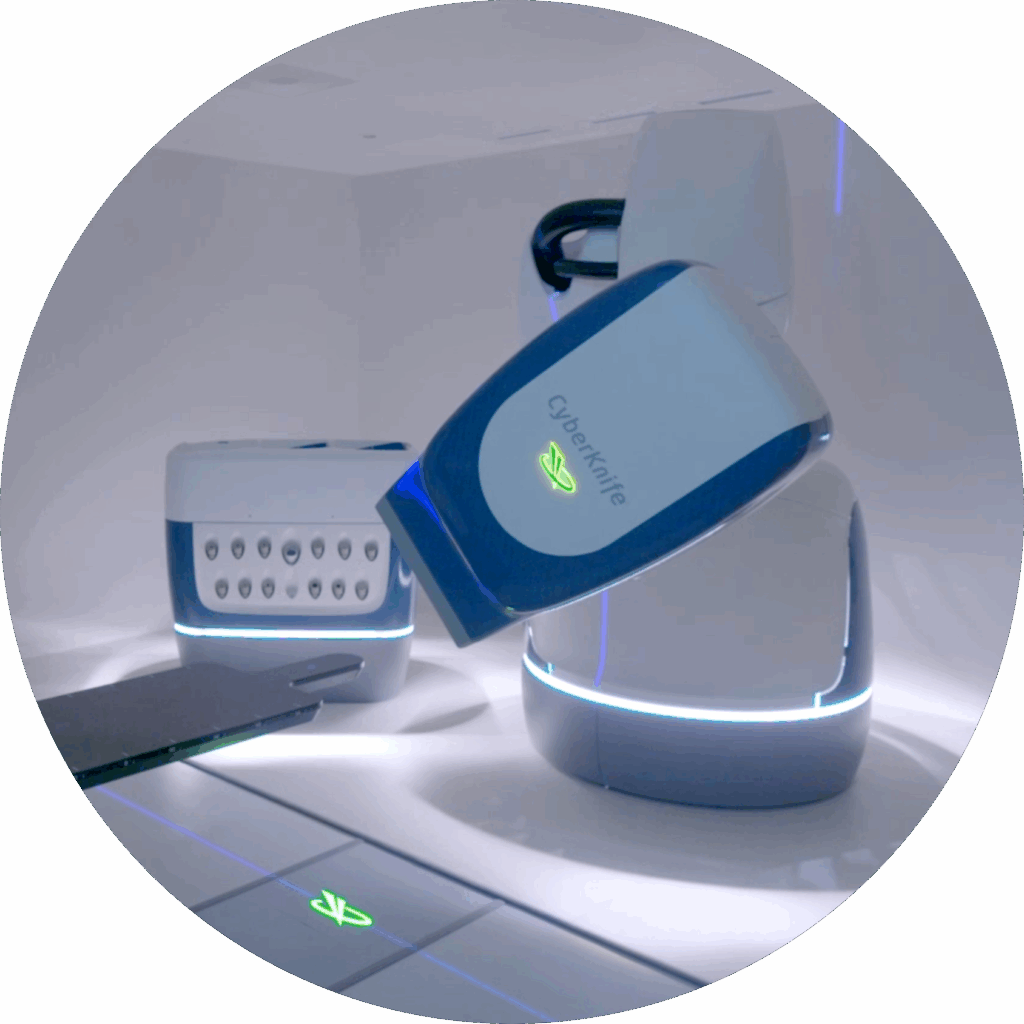
| Plan | Initially planned for conventional linac-based SBRT, the patient was switched to CyberKnife-based SBRT using real-time adaptive motion management (AMM) due to concerns about excessive radiation to healthy tissue |
Treatment Planning:
| Fiducials | A single gold fiducial marker was placed in the lesion approximately one week prior to simulation |
| PTV Margin | 3 mm margin added to the GTV |
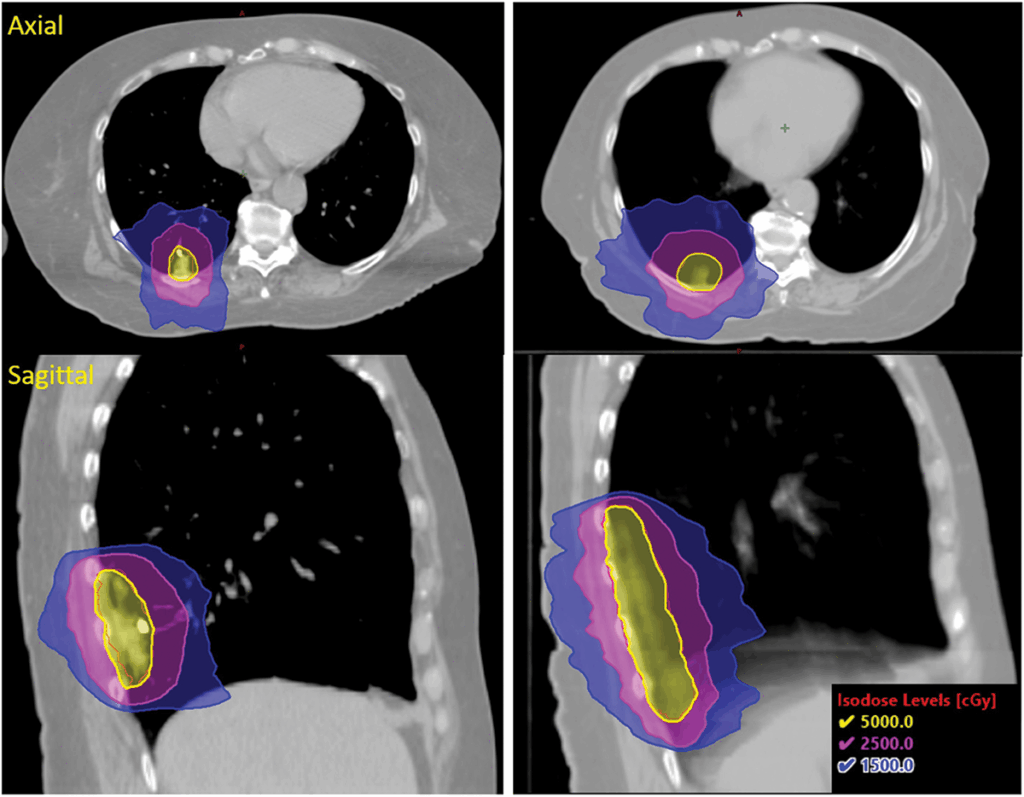
| Dose | 50 Gy in five fractions was prescribed to cover at least 95% of the PTV |
| Treatment Beams | 152 beams on 40 nodes |
| Estimated Treatment Delivery Time | 46 minutes |
| For Comparison a VMAT Plan was Created | PTV expanded 5 mm from the ITV. The same clinical goals and OAR dose constraints were applied |
Outcomes:
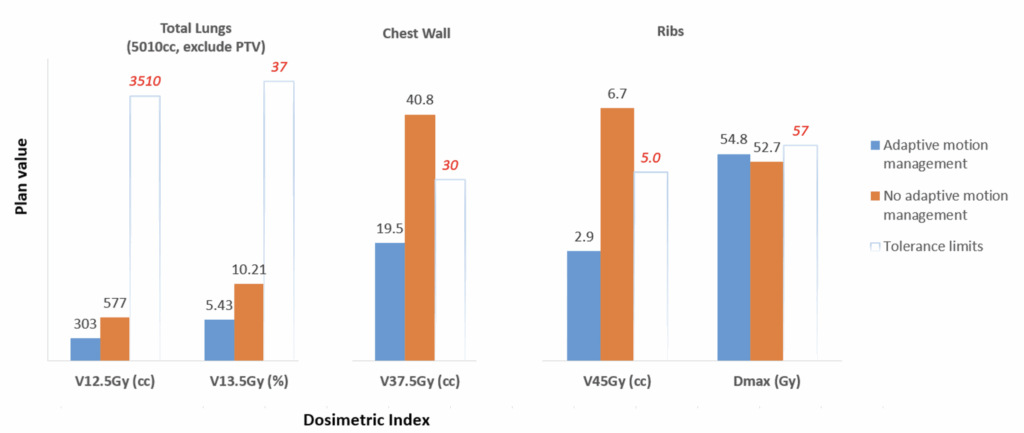
- The CyberKnife® plan with Synchrony® real-time adaptive radiotherapy significantly reduced radiation dose to the OARs as shown in figures 3 and 5.
- The patient received the five-fraction treatment with the CyberKnife System as scheduled with no acute treatment toxicity.
Advantages:
- The CyberKnife® System with Synchrony® real-time adaptive radiotherapy “allows the removal of the motion margin from the planning target and allows beams to only target the tumor itself, thus significantly avoiding unnecessary dose to healthy tissues”.
- “Similar applications would also be beneficial to liver or abdominal cases where lesions are close to the diaphragm and have significant motion or are surrounded by low-dose-tolerance OARs such as the duodenum and small bowel.”
Conclusion:
Chen X, Hayes S, Cohen R, et al. (June 20, 2025) Stereotactic Body Radiotherapy of a Lung Tumor With Large Respiratory Motion Using RealTime Adaptive Motion Management: A Case Report. Cureus 17(6): e86436. DOI 10.7759/cureus.86436
Important Safety Information:
Most side effects of radiotherapy, including radiotherapy delivered with Accuray systems, are mild and temporary, often involving fatigue, nausea, and skin irritation. Side effects can be severe, however, leading to pain, alterations in normal body functions (for example, urinary or salivary function), deterioration of quality of life, permanent injury, and even death. Side effects can occur during or shortly after radiation treatment or in the months and years following radiation. The nature and severity of side effects depend on many factors, including the size and location of the treated tumor, the treatment technique (for example, the radiation dose), and the patient’s general medical condition, to name a few. For more details about the side effects of your radiation therapy, and to see if treatment with an Accuray product is right for you, ask your doctor. Accuray Incorporated as a medical device manufacturer cannot and does not recommend specific treatment approaches. Individual results may vary.
© 2025 Accuray Incorporated. All Rights Reserved. Accuray, the Accuray logo, and other trademarks are trademarks or registered trademarks of Accuray Incorporated and may not be used without permission. For more information on Accuray and its trademarks, please visit www.accuray.com/trademarks. MKTCKCSCC16092025#1