CASE STUDY | ROYAL BRISBANE AND WOMEN’S HOSPITAL
Use of Motion Management to Model Unmanaged Motion: Dosimetric Consequences of Unmanaged Prostate Motion Assessed Using Real-time Radiotherapy Adaptation Data
Authors:
Scott B. Crowe, Jemma Walsh, Gregory Rattray, Philip Chan, Tanya Kairn, Cancer Care Services, Royal Brisbane and Women’s Hospital, Brisbane, Australia
Summary:
Patient Profile:
| Patient | 78-year-old male |
| Diagnosis | T2c N0 M0 prostate adenocarcinoma |
| Dose | 60 Gy in 20 fractions |
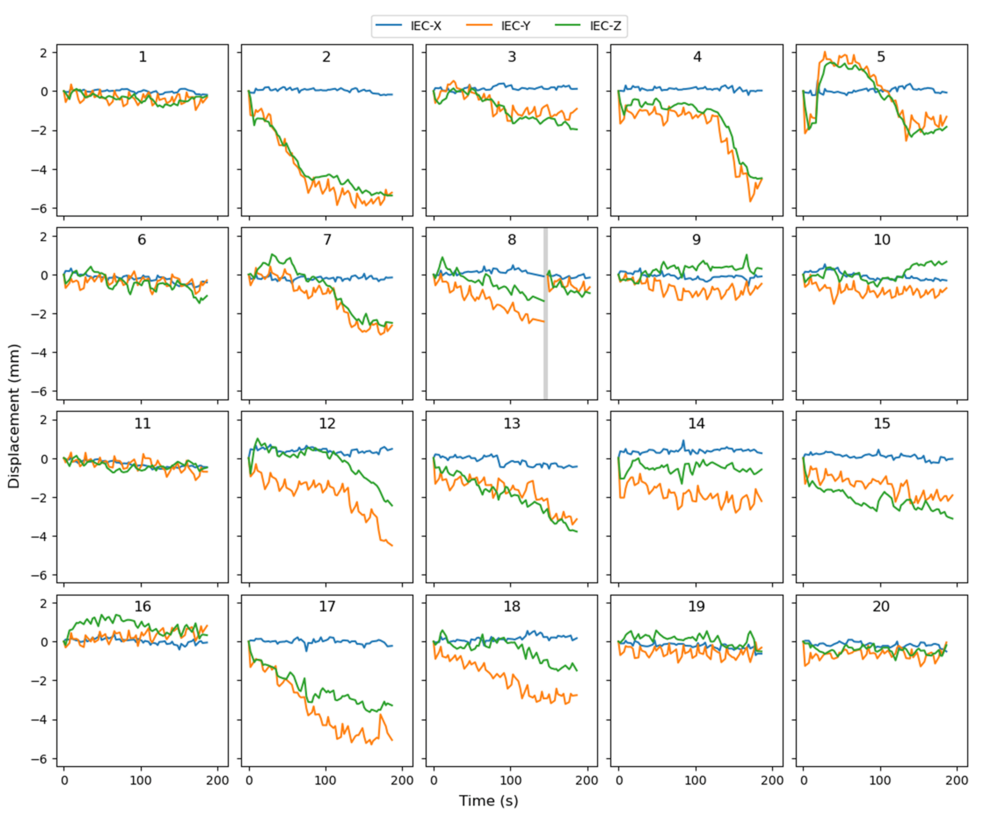
| Case Challenge | Frequent continuous drift of the prostate during treatment |
Methodology:
- Real-time Synchrony® motion data extracted following treatment was used to simulate dose delivery without real-time adaptation.
- Dose distributions were deformed using a voxel-wise deformation vector field that accounted for couch motion interplay.
- Two scenarios were modelled:
- Standard hypofractionated regimen (60 Gy/20 fractions, 6 mm margin).
- Simulated ultra-hypofractionated SBRT regimen (40 Gy/5 fractions, 3 mm margin).
Key findings if the patient had not been treated with motion management:
| Standard Regimen | CTV coverage was maintained even in worst-case drift, but PTV coverage would be compromised without Synchrony |
| SBRT Simulation | Significant underdosage occurred in worst-case scenarios, with CTV V95% dropping to 93.3%, below acceptable limits |
Conclusion:
Implications:
- The study highlights the importance of real-time tracking in maintaining dose accuracy.
- Suggests that narrow margins without motion management may lead to biochemical failure.
- The deformation modelling approach offers a valuable tool for evaluating margin adequacy and guiding treatment planning.
Crowe S B, Walsh J, Rattray G, et al. (April 20, 2025) Use of Motion Management to Model Unmanaged Motion: Dosimetric Consequences of Unmanaged Prostate Motion Assessed Using Real-Time Radiotherapy Adaptation Data. Cureus 17(4): e82620. DOI 10.7759/cureus.82620
Synchrony® is available in the US and EU markets. This feature may not be commercially available in all markets and is subject to regulatory clearance or approval. Kindly contact your regional Accuray representative or distributor to confirm the regulatory status.
Important Safety Information:
Most side effects of radiotherapy, including radiotherapy delivered with Accuray systems, are mild and temporary, often involving fatigue, nausea, and skin irritation. Side effects can be severe, however, leading to pain, alterations in normal body functions (for example, urinary or salivary function), deterioration of quality of life, permanent injury, and even death. Side effects can occur during or shortly after radiation treatment or in the months and years following radiation. The nature and severity of side effects depend on many factors, including the size and location of the treated tumor, the treatment technique (for example, the radiation dose), and the patient’s general medical condition, to name a few. For more details about the side effects of your radiation therapy, and to see if treatment with an Accuray product is right for you, ask your doctor. Accuray Incorporated as a medical device manufacturer cannot and does not recommend specific treatment approaches. Individual results may vary
© 2025 Accuray Incorporated. All Rights Reserved. Accuray, the Accuray logo, and other trademarks are trademarks or registered trademarks of Accuray Incorporated and may not be used without permission. For more information on Accuray and its trademarks, please visit www.accuray.com/trademarks. MKTRXCSCC160925#4